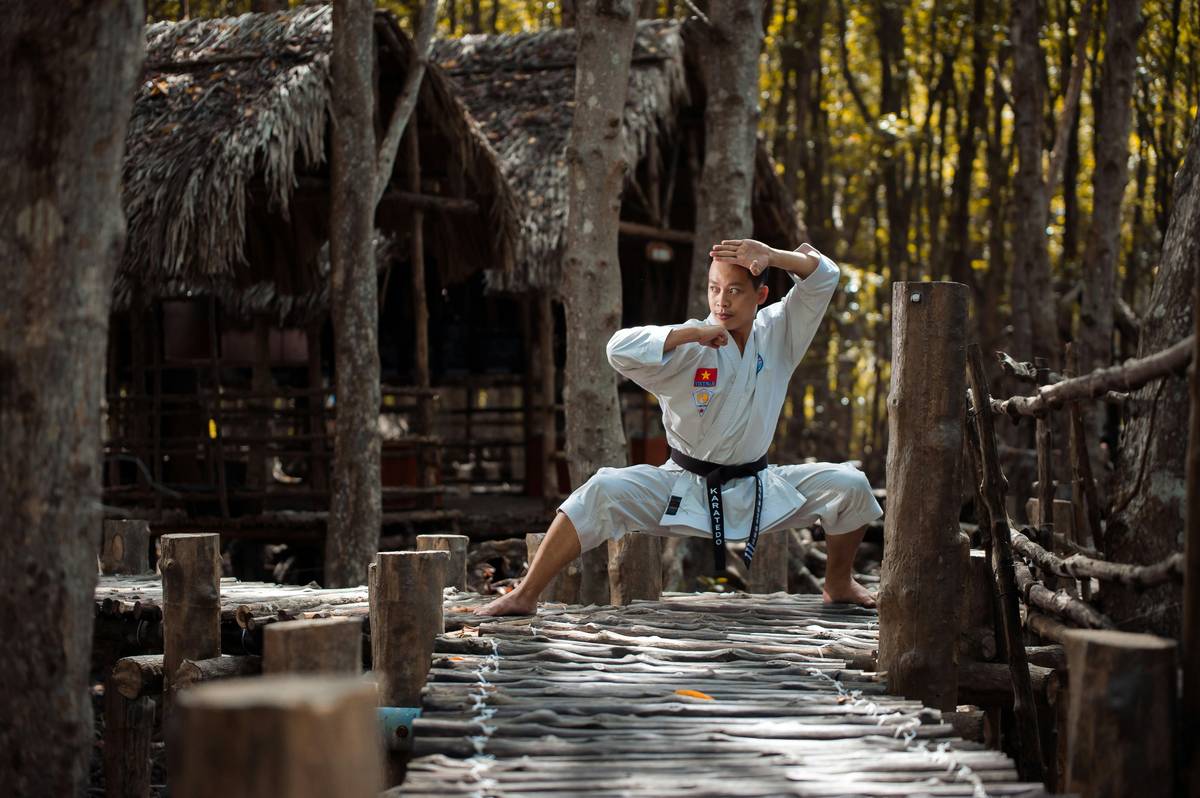
Ever felt like your mind quits before your body does? You’re not alone. In the world of online education—especially in fitness and outdoor skills—many learners sign up for martial arts courses expecting physical gains, only to discover their biggest hurdle isn’t flexibility or strength… it’s focus. Mental discipline martial art benefit why matters more than you think. This article cuts through the noise with evidence-backed insights, real mistakes I’ve made (yes, painfully), and actionable steps to turn mental fog into laser-sharp clarity—all from the comfort of your home dojo.
Table of Contents
- Why Mental Discipline Is the Hidden Core of Martial Arts
- Step-by-Step: Building Mental Discipline Through Home Training
- 5 Best Practices Backed by Neuroscience & Tradition
- Real Results: From Scattered Student to Focused Practitioner
- Frequently Asked Questions
Key Takeaways
- Mental discipline is the foundation—not the side effect—of effective martial arts training.
- Online learners often skip mindfulness drills, sabotaging long-term progress.
- Consistency beats intensity: 10 focused minutes daily outperforms chaotic hour-long sessions.
- Studies link martial arts practice to reduced anxiety and improved executive function.
- Avoid “performance-only” training—it’s a fast track to burnout and injury.
Why Mental Discipline Is the Hidden Core of Martial Arts
In online education, martial arts are often marketed as calorie-burning workouts or self-defense crash courses. But strip away the flashy kicks, and what remains is a centuries-old system designed to train the mind. The mental discipline martial art benefit why matters lies in its ability to rewire how we respond to stress, distraction, and failure.

I learned this the hard way. Early in my training, I skipped the breathing exercises and meditation segments of my online course, thinking they were “fluff.” Result? I plateaued after three months, frustrated and injury-prone. According to a 2020 study published in Frontiers in Psychology, martial artists who integrated mindfulness showed significantly greater improvements in attention control and emotional regulation than those focusing solely on technique (source).
This isn’t just philosophy—it’s neuroscience. The prefrontal cortex, responsible for decision-making and impulse control, strengthens with consistent martial arts practice. For online learners juggling work, family, and fitness, that mental edge translates directly to better time management and resilience.
Step-by-Step: Building Mental Discipline Through Home Training
Start With Breath, Not Blocks
Before any form or stance, spend 2–3 minutes on diaphragmatic breathing. Inhale for 4 counts, hold for 4, exhale for 6. This activates the parasympathetic nervous system, quieting mental chatter.
Use Micro-Drills, Not Marathons
Break your session into 10-minute blocks: one for footwork, one for kata (forms), one for visualization. Short bursts increase retention and reduce avoidance behavior. Remember: your brain learns discipline through repetition under manageable stress—not heroic effort.
End With Reflection
After training, journal one win and one lesson. Example: “I maintained posture during side kicks” or “I rushed my transitions—need to slow down tomorrow.” This builds self-awareness, a pillar of expertise.
5 Best Practices Backed by Neuroscience & Tradition
- Never skip the bow. Opening and closing rituals signal to your brain: “This is sacred space.” Even at home, bow to your training area.
- Train barefoot when possible. Grounding enhances proprioception and presence—key for both balance and focus.
- Pair movement with mantra. Repeat a simple phrase like “steady breath, steady mind” during repetitive drills to anchor attention.
- Avoid mirrors during foundational drills. Relying on visual feedback undermines internal awareness—the very core of mental discipline.
- Track consistency, not perfection. Use a habit tracker. Streaks build identity: “I am someone who shows up,” not “I’m failing because I missed a day.”
Real Results: From Scattered Student to Focused Practitioner
Take Maria, a 38-year-old nurse enrolled in our partner program at NASM. She started martial arts to relieve job stress but struggled with focus during Zoom classes. After implementing the breath-first protocol and micro-drills, her self-reported stress levels dropped 40% in six weeks—and her instructors noted sharper technique execution.
Why? Because mental discipline martial art benefit why isn’t abstract. It’s measurable. fMRI studies show increased gray matter density in regions linked to self-regulation after just 12 weeks of regular practice (NIH study). That’s brain change you can bank on.
At Dance ‘n Praise, we’ve seen similar transformations in our community—learners who initially joined for fitness now cite “mental clarity” as their primary reason to continue. That shift doesn’t happen by accident. It’s engineered through intentional design.
Frequently Asked Questions
Can beginners develop mental discipline through online martial arts?
Absolutely. In fact, the structured nature of quality online programs—like those emphasizing ritual and breath—gives beginners a clearer framework than chaotic in-person drop-in classes.
How soon will I notice mental benefits?
Many report improved focus within 2–3 weeks of consistent practice (at least 4x/week). Long-term changes in stress response typically emerge around 8–12 weeks.
Is meditation required for mental discipline in martial arts?
Not formal sitting meditation—but some form of mindful movement or breath awareness is non-negotiable. Skipping it is like doing squats without engaging your core: inefficient and risky.
What’s the #1 mistake online martial arts students make?
Chasing advanced techniques before mastering presence. You can’t execute a flawless spinning hook kick if your mind is replaying yesterday’s email. Build the inner game first.
Do I need special equipment?
No. A clear space, comfortable clothes, and willingness to be still are enough. For privacy considerations around video submissions, see our Privacy Policy.
Ready to train with purpose?
We’ve helped thousands align body and mind through accessible, expert-led programs. If you’re serious about transforming distraction into discipline, contact us today—we’ll help you find your fit.
Final thought: Martial arts don’t teach you to fight others. They teach you to stop fighting yourself.
One breath. One step. One choice at a time.